The departures of Bobby Kamwa and Matt Baker have been announced this week ahead of the transfer window opening, serving as a brutal reminder of the narrow margins on which a League Two club like County operates.
Both players were offered improved terms by the club but have announced plans to progress their careers elsewhere. Kamwa faced a topsy-turvy season with a long goal drought ended with vital goals against Barrow and Shrewsbury in the fight for survival. Baker, only 23, had grown into a leader and wore the armband. The two departures leave a large hole in the upcoming season’s squad, and leave bigger questions for owner Huw Jenkins’ model of recouping investment on players in the form of transfer fees.
League Two is full of clubs struggling to find revenue opportunities. County have shown over successive seasons that they can identify talented players, develop them, give them responsibility and seek interest - the sales of Will Evans and Cameron Antwi demonstrated a potential path. However the club has struggled of late to re-sign its experienced pros, with the wage power of larger budget sides like Bristol Rovers forcing the club to let players go for free. County are rarely negotiating from a position of strength.
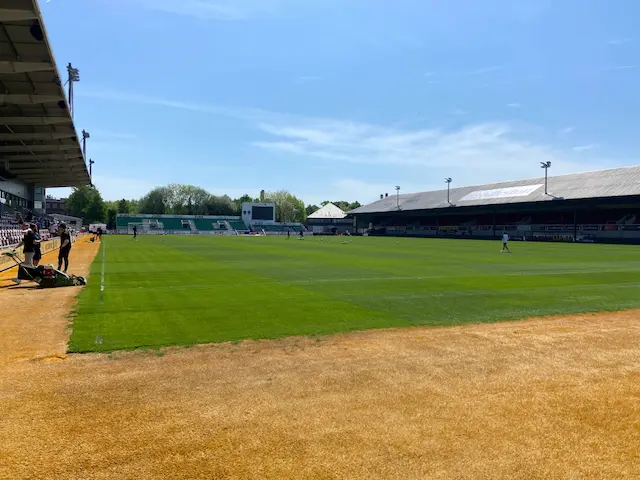
County do not have the same revenue opportunities as many competitors. Rodney Parade gives the club a home in the city, and the news the club reached 2,000 season ticket sales in record time last week should be welcomed. But Rodney Parade is not an owned asset that can be fully sweated for year-round income. Training facilities, matchday growth, commercial inventory and player trading all become part of the same equation: how do you sustain a competitive squad when so many income streams are either limited, shared or dependent on on-pitch success?
The loss of Kamwa and Baker should not be read only as a failure to keep two good players. It is a structural warning. Newport can be well-run, make sensible offers and still lose. Reforms like Squad Cost Ratio are going to force clubs like Newport to find revenue streams fast, not because its owner is unwilling to invest but because the club legally cannot spend more than it earns without being punished by the EFL. Rumours abound that the club is seeking new facilities in the city to expand - and this should be its top priority.
For supporters, the frustration is obvious. For the club, there is now an uphill struggle to tread water in League Two on existing budgets, while trying to modernise the back office to expand revenue opportunities and establish itself as not just a surviving club, but one which can retain its talent and take a position of strength in the transfer window.